Caponeu event
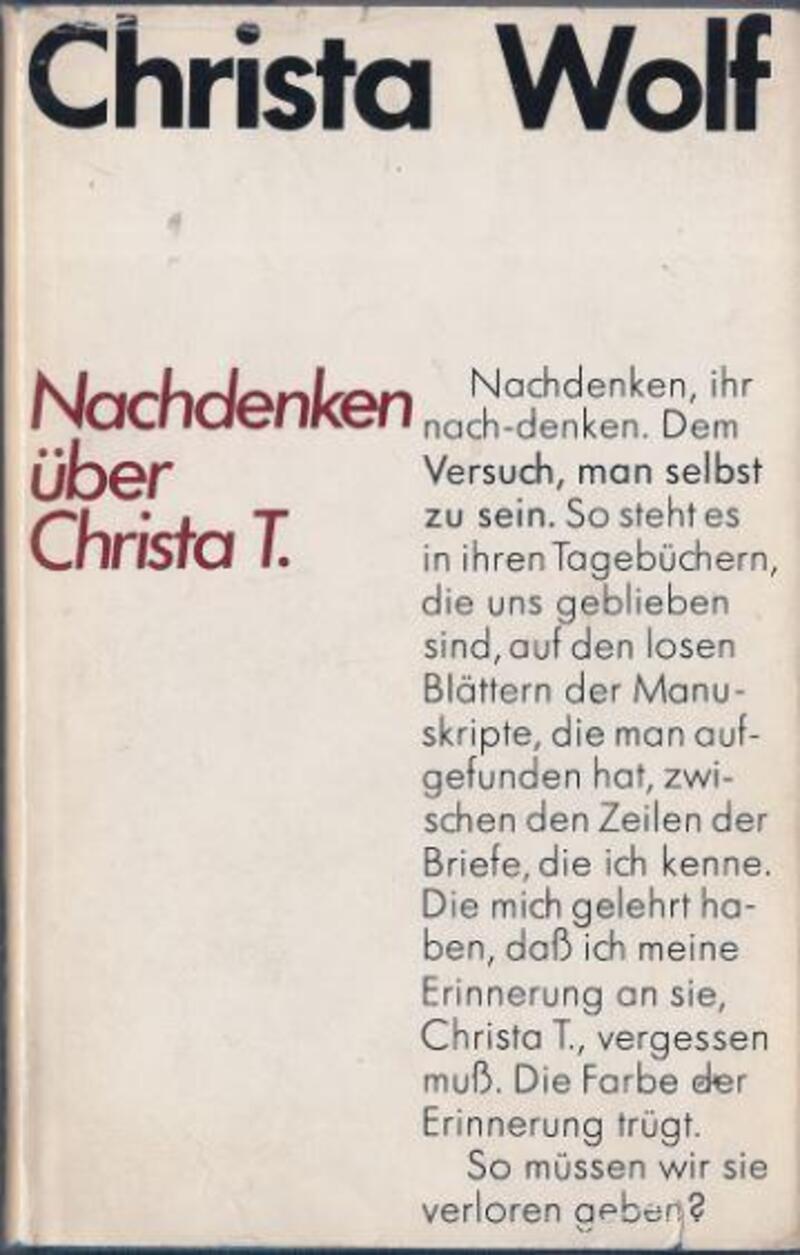
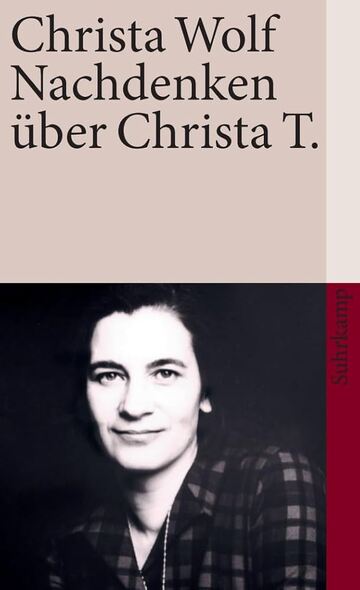
Book Club Politics and Literature: Everyday Life Under Authoritarianism | Christa Wolf: Nachdenken über Christa T.
Caponeu event17.11.2025
Right at the beginning of the meeting, we agreed that the novel is not a women's novel, but a social novel. Different perspectives were mentioned from which the novel was read, such as the Soviet one (“This was clearly a completely different kind of socialism.”) or the West German one (“Everyday life could have played out the same way in West Germany.”).
The novel triggered a number of memories, for example, of the documentary “Children of Kollwitzplatz” (perhaps this was meant) and the film “Miss Butterfly” (banned after the 11th Plenum, screenplay by Ch.W.).
Quite early on, the question was raised as to whether and to what extent the title fits the book club's theme: can what is depicted here truly be described as “authoritarianism”? If not, is the novel a trivialisation? Must every novel from the GDR accuse the state? Instead of an answer, the following comment came: the discourse is formulated less as an indictment; it is permeated by a deep sorrow, born from the demands and expectations that are repeatedly shattered. Is this a shattering of the system, or the shattering of the promise made by the system? The idea of a shattering of the system, in any case, is a misconception, according to one voice.
Throughout the novel, the vision of a better society is palpable: this is the true essence of reality and the insight gained from this novel.
When it comes to gender relations specifically, it has been noted that these were not gender relations in socialism, but rather in a specific period within socialism (the 1950s), when infidelity was indeed something for which one had to answer collectively. Opinions differed on the question of whether one was actually only allowed to love certain people in the GDR. And whether this was only true for the GDR!
At all events, it is evident that Christa Wolf does not accept the hierarchy of primary and secondary contradictions: gender relations and the positions of women are just as important as, for example, the contradiction between labour and capital.
The slogan “Be realistic, demand the impossible!” was also referenced in this context—the novel being seen as the GDR version of this.
Furthermore, the novel contains no positive characters and is written in a formalistic style (i.e., it does not follow any normative poetics). Through her connection to an editor, Wolf nevertheless managed to get it published.
In this context, it is also important to mention a comment by one of the participants, namely that “the censorship mechanisms in the GDR were fuelled by a deep distrust of the Germans, because 99% of the citizens followed Hitler” (so-called “fear of the enemy”). Literature played a significant role in this context.